
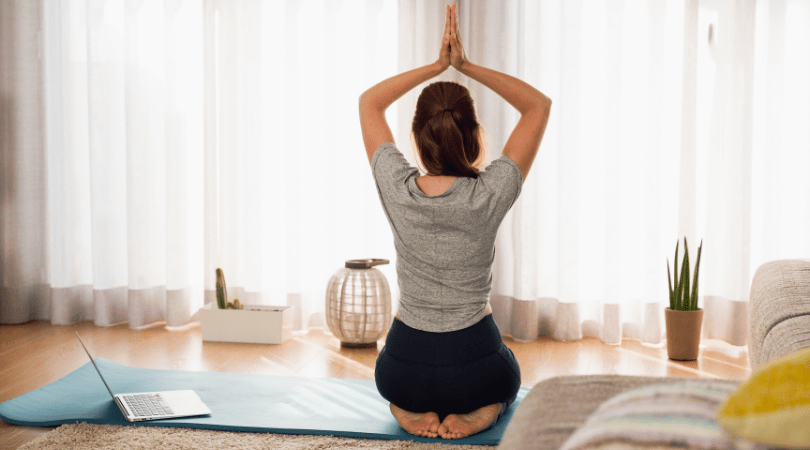
If you practice regularly at the studio or take classes virtually at home, you are learning about yoga each time you practice. But how often do you stop to think about the progress you’re making in your practice? Or what you’d like to learn next?
First, Ask Yourself Why You Practice
Why do you practice yoga? For stress relief? Flexibility? Strength? Greater body awareness? Community? All of the above? There is no right or wrong answer. There are numerous reasons that bring people to the mat and they are all valid reasons to practice yoga.
More specifically, what would you like to cultivate in your practice? Greater peace of mind? A stronger core? Proficiency in arm balances? Less back pain? Take time to reflect on what you’d like yoga to bring not only to your practice but to your entire life.
Our asana practice (the physical practice of yoga) is highly individualized, regardless of whether we practice in a group, private session, or at home. As practitioners, we each control the aspects of our practice that we’d like to cultivate by focusing on those things and less on other things.
So, it’s helpful to first get clear on what we’d like to improve upon and learn within the context of yoga. Keep in mind that progress in your yoga practice doesn’t necessarily equate to more difficult poses and challenging sequences. Progress can also mean finding greater awareness and engagement in the poses you’ve been practicing for years. For example, my experience practicing Triangle pose (Utthita Trikonasana) today is vastly different than it was ten years ago; and I attribute that to my level of engagement in the pose and understanding of the pose, both mentally and physically.
Getting the Most Out of Group Classes
- It’s Your Practice
Most yoga teachers give their students the freedom to modify or amplify poses as necessary during group classes. This means that you as the practitioner get to decide whether your body needs a deep back bend at the end of class or not. It means that when you feel low on energy, you can take a break when needed. If you’re coming to the mat to unwind and destress, you might take the gentler options to cultivate more ease and relaxation in your body. On the flip side, if your goal is to build strength through a vigorous practice, you can opt to take three chaturangas instead of one.
Remember that you can dial your practice “up” or “down” depending on your goals and level of engagement—this gives you the freedom to personalize your practice depending on how you feel that day and to meet your goals. As long as you aren’t doing anything dangerous or distracting in class, you have the freedom to make your practice your own. If ever in doubt about modifying or amplifying your practice, ask your teacher before or after class. - Ask Questions
Yoga teachers love to answer questions and talk about yoga with their students. Don’t hesitate to ask questions before class (what’s the focus of our class today?) or after class if you have comments or questions about your experience. If you have trouble with a pose during class, ask your teacher to help troubleshoot it with you after class. Asking questions shows that you’re an engaged student, and most teachers welcome your input and interest. - Switch it Up
We all love our regular teachers and routine classes—and that’s great! But be open to trying a different class or new teacher when the opportunity arises. If your regular teacher is going to be out of town, take the opportunity to practice with whomever is subbing. Even if it doesn’t end up being a spectacular experience, you’ll still most likely learn a thing or two.
If you typically practice vinyasa, give the Hot 26 sequence a try for something different. Practicing a different style of yoga can help breathe new life into the poses and offer a different perspective on your practice. If you typically practice vigorous styles of yoga, consider trying Slow Flow vinyasa or a restorative class for a different approach. Being open to different styles of yoga can broaden your practice and give you more options as you progress through the entire lifespan of your yoga journey.
Private Sessions and Workshops
If you’re ready to learn more than you can in group classes, private sessions with your teacher can be a great investment in your development. Private sessions give you direct feedback and insight into your practice, as well as provide direction on how to meet your individual goals. Private sessions are tailored to you, so come prepared with ideas on what you’d like to work on in order to maximize your time and investment.
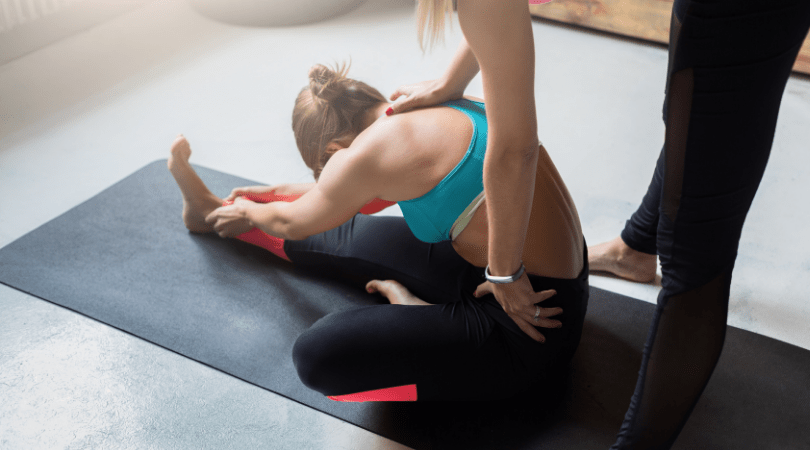
Workshops are also a great way to dive deeper in your practice. Workshops are longer format with a smaller number of students, which allows for more interaction and personalized attention than a typical class. Workshops usually have a specific focus such as, “Perfecting your Chaturanga,” “Yoga for Runners,” or “Introduction to Inversions.” If there are specific topics you’d like to see covered in workshops at Full Circle, please let us know!
Practicing at Home
There are numerous ways to practice at home, particularly now during the pandemic. There are numerous pre-recorded classes and live stream classes that can support your home practice. Live streams allow for some level of interaction and feeling of togetherness, while pre-recorded practices offer a more flexible option to fit any schedule.
There are numerous benefits to practicing at home. A home practice is convenient, time efficient, and allows for privacy not afforced at the studio. While I love practicing in a group, I also appreciate my home practice because I don’t concern myself with what I’m wearing, nor am I self-conscious about falling out of an arm balance or inversion (plus, my corgis get to hang out next to my mat while I practice). Practicing at home also gives you the freedom to focus on specific poses that you’re interesting in cultivating or improving. When I practice at home, for example, I might follow a pre-recorded class for 45 minutes and then pause the video to work on handstand and forearm balance on my own. And if there are pre-recorded classes I really enjoy, I can always go back and repeat them.
Keep in mind that your practice can include all of these options—group classes at the studio, streaming classes at home, and private sessions and/or workshops from time to time. Varying your method of learning and practicing can offer a balance that affords the best of both worlds and accommodates your busy life. If there is anything we at Full Circle can do to support you and your practice, please let us know.
Namaste.

Jessica is a student of yoga first, a teacher of yoga second. A former MBA corporate marketer with a passionate for writing, she loves to connect with people through words, whether that’s in class or through the written word. Jessica is also a long-distance runner, avid traveler, vegan baker, and mama to two adorable corgis.
 FCYP blog