You Are Cordially Invited to Abundance

I recently watched this 1979 interview between music legend, Bob Marley, and an Australian reporter, and all I could think was….cheekbones. This man is living in cheekbone abundance. The dictionary definition of abundance is “a large quantity of something”. I like how vague this is. It isn’t necessarily good or bad, it’s just a lot. That’s why it’s so important for each of us, personally, to understand what our own idea of abundance is. Right away we may think of “a large quantity” of money or financial freedom, just as the reporter in the interview did. But is abundance just a quantity of something? Is it a quality? We’ve got to know what it is that we seek, so that when it arrives, we will recognize it and can receive.

There is a parable in the Christian Bible about a great feast. In it, a rich man (always a dude in these texts, am I right?) sets out an abundant banquet and invites all the VIP’s in town. But they all have stuff going on; work and assets and relationships that require their time and attention. All the busy VIP’s make their excuses and skip the banquet. Then the host invites everybody else; all the “have nots”. They show up, and the table is full, and they receive, and all have a good old time. I wonder, if I got the invitation, would I show up, or would I have an excuse? Would I recognize abundance when it presented itself, or would I be too busy looking for it?

“The world is full of abundance and opportunity, but far too many people come to the fountain of life with a teaspoon instead of a steam shovel. They expect little and as a result the get little”, Ben Sweetland. This quote refers to the paradigm that there is enough for everyone and even more, as opposed to a fixed and finite amount that has to get distributed between all of us. Stephen Covey explored this phenomenon in his best-selling book, The7 Habits of Highly Effective People, and gave us the terms “scarcity mentality” and “abundance mindset”. Scarcity mindset is born of the fear that there is not enough to go around, and therefore we should cling to, and grasp at all we can. If we fail to do this, we not get our share, and we will suffer. In the yoga sutras, we would recognize this idea in the Yama, Aparigraha, or non-grasping. People in this mindset feel that when another person does well, they themselves lose something. They may also feel that when they succeed it is the result of diligent effort and ability, but the success of another can only be attributed to luck. In his article, “Get Rich Slowly”, J.D. Roth explains, “Fear is always at the heart of scarcity: fear of failure, fear of the future, fear of missing out”. By that rule, love would be at the heart of an abundance mindset. And there are many major studies that offer measurable proof that positive thoughts and feelings do, in fact, have positive effects on careers, relationships, and overall quality of life.

But is this psychological practice or just magical thinking? Let’s look at it through the familiar lens of the marketing algorithm. Even if you don’t partake in social media, you have probably used technology to look something up at some point- lyrics to a song, a news article, cat memes (meeee), a recipe. That data gets eaten up by the algorithm which now recognizes that I like cat memes, and therefore sends me more, “Oh, you like videos of cats doing fashion shows, Emily? Here have lots more, have so so many”. This is a very real and practical example of how the “magical thinking” concept of the Law of Attraction works. When we give our attention to a thought, the Universe will send us more variations on that thought. Or perhaps it is our own psychology recognizing a pattern of thinking, and rejecting any thoughts or energies that don’t align with the established pattern. Either way, our thoughts become our experience. Perhaps magical thinking and psychological practice are not mutually exclusive? 

Gratitude is another powerful practice in our exploration of abundance. It is very difficult to feel fear or sadness or anger at the same time that we are feeling gratitude. Remember that fear is the root of scarcity mentality. But how can we possibly be expected to feel grateful when we experience scarcity? I am not being sarcastic here. The consequences of being human include true suffering and loss. When we experience trauma or injustice, or witness it in the world, are we really expected to somehow magically transcend that suffering and feel thankful? C’mon. We need to experience and process suffering so that it doesn’t become a permanent resident in the bodymind. We might recognize this type of self-awareness as Shadow Work. And it is work; it is a practice. Gratitude, like Shadow Work or like yoga, is a practice that we have to interact with and cultivate every day. On the mat when we cannot achieve a pose, we study the situation almost scientifically. What is the obstacle? Is there physical or mental resistance? What steps can be taken to move through the resistance? Where, in this present moment, is there Love? And once we come into Love, we also come into gratitude. BKS Iyengar said, “If you can stand on your mat for yoga and you have available at least fifteen minutes, you are truly a lucky person. That alone is a priceless gift and a tool to improve your life, which not many have. With these thoughts, have a sense of gratitude for what is available to you, you get to practice.”

Something else that Mr. Iyengar said is that, “There is only one reality, but there are many ways that reality can be interpreted”. The same is true of abundance. It is personal and it is fluid, but it is always there for us. We are living in a material world and we are material girls and boys and women and men and non-binary folks. In our material world, abundance is often is recognized as “a large quantity” of someTHING. But abundance is also a feeling; an experience. We can have an abundance of creativity, an abundance of unscheduled time, an abundance of intimacy, an abundance of fierce cheekbones. In science class we all learned about the “building blocks of the Universe”, and looked at drawings of atoms with all their labeled parts. It’s easy to think of the Universe as being made up of labeled things. But subatomic particles are not “things” at all. Rather, they are bundles of energy. And these energy bundles are in constant relationship to, and with, each other. The building blocks of the Universe are not a thing after all, but a relationship, a feeling. Ask yourself, if you had no restrictions of money or time, and there was no chance of failure, what would you be doing? What feelings or experiences would you seek? This will reveal what you truly want. When your invitation arrives, may you recognize it for what it is, and may you take your place at the feast. May you receive in abundance.
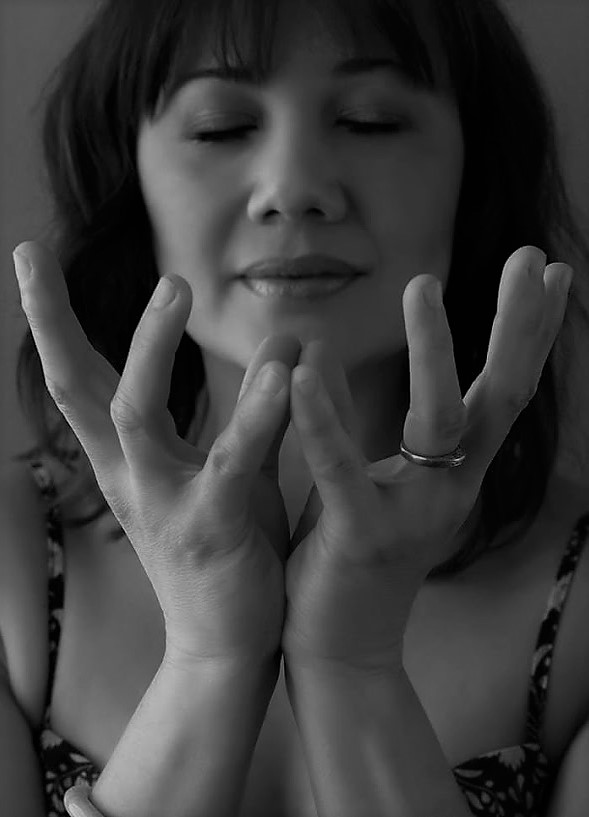
written by Emily Pick
FCYP Yoga Teacher + Sparkle Queen

The Art of Perspective

With everything swirling around us in the present, we often hear the word “perspective”.  Throughout my life I have been given advice  – solicited or not – which includes the admonition to have “some perspective”, or to look at a situation from a “different perspective”.   What is this “perspective” of which they speak?  Do I even have perspective?  If so, how did I get it and what good comes from it?

I’ve spent many quiet moments pondering those questions surrounding perspective.  Perspective can be charmed when called upon.  It’s always with us, whether or not we choose to acknowledge it.  We don’t need to seek to obtain it, nor need we exert much effort to gain it.  We must simply be.  The very act of living – of being present for the experiences of our daily lives – conveys perspective.  The skill of perspective isn’t so much in its acquisition, but in its application.

Perspective has many synonyms:  wisdom, outlook, perception, viewpoint, etc.  But no matter which word we choose to use, in the end they’re all variations on the same theme.  And they’re all powered by the same fuel: experience.   Think about it.  Think of how our life experiences shape our perspectives.  Remember the angst and melodrama of our teen years?  Think about how what once seemed earth-shattering in our teens now feels less so much less so through the magic of perspective.  We didn’t necessarily try to minimize our experiences, but the backward-glance through time has allowed us to view those events in their proper perspective.

As adults, the trick is call on that perspective as events unfold.  I’ve been honored to have a number of people share with me their feelings and their fears surrounding current events.  Many have shared that they feel that our current situation is “the end of life as we know it” or “the beginning of the end”, or that they “fear for the future”.   I believe we all share these feelings and fears to some degree.  I always suggest that a healthy dose of perspective is the flashlight we can call on to navigate our way through the storm.  We can ramp up the lumens of perspective to light the way.

We have all lived through personal and world events that seemed insurmountable.  Every generation has.  I recall my sophomore year in high school we were assigned to watch The Day After, a made-for-tv-movie detailing the aftermath of the “impending” nuclear holocaust (the 1983 geopolitical issue du jour).  I was terrified and traumatized!  I spent many sleepless nights wondering “what if”.  I was 15 (I know you’re doing the math.  No need – I’m 52☺)  and I actually wondered about the future of my children…AT 15!  I clearly lacked perspective.  Then of course college presented some pretty weighty political and philosophical discussions that left me feeling uneasy and afraid.  No matter upon which side of the debate my classmates or I stood, we were all encouraged to look at events critically and with a healthy dose of skepticism – question everything, take nothing as fact.  The process of questioning everything led me down some pretty convoluted rabbit holes, to be sure.  Looking back, I realize that I spent so much time worrying and wringing my hands, I failed to realize what lay before me.  I blinked.  And I missed it.  Those were the good ol’ days.

Perspective shows us that they’re ALL good ol’ days!

In fact we’re in the good ol’ days RIGHT NOW.

Remember waaaay back to last March during the “year which shall not be named”?   I clearly remember feeling the fear and uncertainty that came with having to shut down a new business.  I remember wondering if things will ever be the same.  For the first few days of the shut-down, I was nearly paralyzed by that fear of the unknown.  How long will this be?!  Will we make it?!  What’s going to happen?!  Then it hit me – that magic we call perspective.  I decided to view that time not as a bad thing or something to be feared.  I summoned my perspective and I leaned in.  I recalled previous fears and their outcomes.  I came to the realization that there is so much beauty occurring in front of me and I was missing it because I was choosing to focus on my fear.  That perspective helped me let go of the scary hypotheticals and be present for those moments with my family and the magic that happened within them.  And now I look back at that time with gratitude because I was there for it!   THOSE WE THE GOOD OL’ DAYS!!!

Now that you know my age, it probably won’t surprise you that I grew up listening to and LOVING Carly Simon.  I still do, although now I get my fix on Spotify instead of vinyl, 8-tracks, cassettes, or even cds.  One of my favorite songs of hers is Anticipation.  It’s a catchy and beautiful song about the perspective that comes through savoring the present.  That song has always spoken to me.  I even used a line from it as one of my senior quotes in our yearbook.  It seemed cool at the time, even a little quirky for its paradox.  And in 1986, it felt totally retro!  Little did I know how much that quote would come to mean to me or how its significance would grow.   Those of you who are fellow fans of CS are probably already singing it in your head.  If so, sing it out loud for all to hear!  C’mon!!  You know the line!  “Stay right here, ‘cause these are the good ol’ days.”

Do.

Because they are. 

There are countless examples of how perspective has softened the edges of traumatic events.  No matter what’s going on around you or how dark things seem, you can always summon the gift of perspective to help you reframe a situation.  Everything passes.  It’s all temporary.  And years from now when we look back, we’ll say to ourselves and our loved ones, ”Yep!  That sure was a crazy time!  But those were the good ol’ days.”  And you’ll be right.
Why wait?  Do your self a favor.  Get out your perspective, dust it off, and put it to use NOW.  Don’t let it go to waste.  You’ve earned it.  It’s right there waiting for you.  It’s an unlimited resource.  And the good ol’ days are happening all around you, even as you read this.  This moment.  The beauty and the magic are right in front of you.  It’s simply a matter of perspective.

written by Beth Corson
FCYP Owner | Yoga Instructor | Head of Inspiration

Season of Joy

December is the month of joy and giving. It’s a time to not only enjoy the winter holidays, but December marks the last month of the year as we transition to the next. In many cultures, this time is celebrated with various festivities and invitations to tap into this our inner joy. Joy is defined by Miriam-Webster as: 

  1. the emotion evoked by well-being, success, or good fortune or by the prospect of possessing what one desires : DELIGHT
  2. a state of happiness or felicity : BLISS
  3. a source or cause of delight

How does joy, the experience of happiness and delight, relate to your practice on the mat? In traditional yoga philosophy, we find that the ultimate goal of the practice of yoga centers around the concepts of Sattva (in balance), Samadhi (oneness), and Ananda (bliss). In Patanjali’s Yoga Sutras, he describes the practice of Yoga as a union between the individual self and the Cosmic Self (God), between the body/mind and the spirit/soul. Without delving too deeply into the yogic and hindu concepts of soul, it is through the 8 limbs of yoga – Yamas, Niyamas, Asana, Pranayama, Pratyahara, Dharana, Dhyana, and Samadhi – that we realize joy.  And through the mind/body/spirit connection we find peace, bliss, and freedom.  The combination of these practices and pathways allows to to alleviate suffering, cultivate peace, and sustain balance & well-being. 

During this auspicious period of transition, cultivating, experiencing, and sharing joy feels especially rewarding. Just as we learned in Charles Dickens’ A Christmas Carol, the spirit of Christmas should be kept all the year. But why? As Ebhineezer Scrooge wondered, what is the point of all the silliness, playfulness, giving, and love??? 

Though yoga philosophies provided insight into these phenomena long before the existence of Christmas, modern science has uncovered the physiological importance of cultivating positive mind-body relationship.

As explained through Polyvagal Theory, The vagus nerve (cranial nerve X) is the defining physiological pathway of this mind-body connection.  The vagus nerve, meaning “wandering nerve”, is one of the most diverse in the human nervous system, and is connects sensory, cardiac, circulatory, respiratory, digestive systems directly to the autonomic nervous system- and to each other. “PVT links the evolution of the autonomic nervous system to the emergence of prosocial behaviors and posits that the neural platforms supporting social behavior are involved in maintaining health, growth and restoration” (2018 Sullivan et al). Take a moment to think about a time when you were stressed. How did you find relief? Did you: 

  • dance? 
  • listen to music?
  • breathe? 
  • do yoga? 
  • connect with friends? 

In short, by tapping into the mind/body connection, we can harness our joy, our power and our calm.  Through nutrition, breath, and movement, we can are able to alter our heart rates, affect or respiration, and thus activate the proper physiological pathways to achieve homeostasis and well-being.  This pathway to joy and peace is built into our amazing bodies, and we each have an innate connection to it.  We already have an intuitive understanding of what works for us and what doesn’t, but I invite you now to begin to consider just *how* you are harnessing your well-being. 

The polyvagal theory elucidates this two-way communication between brain and body as a way to understand how to build resilience (our body’s ability to bounce back from stress to a state of homeostasis/equity/sattva), and thusly wellbeing. The aristotelian concept, “Eudamonia”, is described in Sullivan’s article which offers further insight into *how* joy can be cultivated and sustained. Eudaimonia is defined as:

Eudaimonia

  1. WELL-BEING; HAPPINESS
  2. Aristotelianism : a life of activity governed by reason

Some key phrases in both the definition of joy and eudamonia are “prospect of possessing what one desires” and “a life of activity governed by reason”. Through the lens of yoga, eudamonia, and the polyvagal theory, we can now draw further connections to what we may already have been experiencing in our practice and daily lives. We know there are moments when things seem to just click and be harmonious.  

Use that pathway to sustain your well-being and resilience so it can be called upon in more challenging moments. When you are in that uncomfortable asana, clear your mind and focus on what the body without obsession, allowing awareness to tune into the breath.  Find ease through the sweat as you are further building resilience and teaching yourself how to be in discomfort  with ease, with softness, with connection, and with breath. This is the equation of well-being and joy.  It’s not without obstacles.  But in the connections we see the opportunities.  Through the connection of the body, the breath, and the mind, we arrive at clarity.  In this journey we discover the joy within each opportunity and the power of each moment.   We meet our selves with equanimity, with trust, with peace, and with purpose. Set your intentions and trust the process! That joy is already innately within you. The practice is discovering the ways you can tap into that and explore the depths of your journey with trust and intention.

Jai!

Further Reading:

Sullivan, M., Erb, M., Schmalzl, L., Moonaz, S., Noggle Taylor, J., & Porges, S. (2018, February 06). Yoga Therapy and Polyvagal Theory: The Convergence of Traditional Wisdom and Contemporary Neuroscience for Self-Regulation and Resilience. https://www.frontiersin.org/articles/10.3389/fnhum.2018.00067/full 

Richard M. Ryan and Edward L. Deci. On Happiness and Human Potentials: A Review of Research on Hedonic and Eudaimonic Well-Being. Annual Review of Psychology 2001 52:1, 141-166. https://www.wisebrain.org/papers/HappinessLR.pdf 

Telles, S., Gupta, R. K., Kumar, A., Pal, D. K., Tyagi, D., & Balkrishna, A. (2019). Mental Wellbeing, Quality of Life, and Perception of Chronic Illness in Yoga-Experienced Compared with Yoga-Naïve Patients. Medical science monitor basic research, 25, 153–163. https://doi.org/10.12659/MSMBR.914663

https://www.ncbi.nlm.nih.gov/pmc/articles/PMC6542302/

Donnelly, K. Z., Linnea, K., Grant, D. A., & Lichtenstein, J. (2016). The feasibility and impact of a yoga pilot programme on the quality-of-life of adults with acquired brain injury. Brain Injury, 31(2), 208–214. doi:10.1080/02699052.2016.1225988 

written by Lian Mosher
MS Yoga Therapy, BBA Marketing
C-IAYT 1000, RYT 500 (pending) E-RYT 200, Reiki

Breathe…… Better

What is more essential to our health and well-being than breathing?

Notice your breathing when stressed, anxious, angry, or sad – but also while relaxing

We take air in, we let it out. We repeat thousands of times a day without ever taking notice. Many of us have lost the ability to breathe correctly, and that inability can come with some serious consequences. With daily stress, or during times of crisis it can be difficult to keep our breath flowing effectively to counteract the negative effects stress has on our bodies and minds.

In his book, Breath: The New Science of a Lost Art, author James Nestor writes of his world-wide quest to figure out where we lost our collective breath and where to find it. Drawing on thousands of years of medical texts and recent cutting-edge studies in pulmonology, psychology, biochemistry, and human physiology, Nestor upends the conventional wisdom of what we thought we knew about our most basic biological function. The book discusses a number of salient facts, including:

  • A growing number of studies show that breathing techniques are effective against anxiety, panic attacks, and insomnia.
  • These techniques influence both physiological factors (by stimulating the parasympathetic nervous system) and psychological factors (by diverting attention from thoughts).
  • Because these techniques are safe and easy to use, scientific validation might result in their being more frequently recommended and practiced.

Every relaxation, calming, or meditation technique, and hello! -yoga, relies on breathing, which may be the lowest common denominator in all the approaches to calming the body and the mind. Research into basic physiology and the effects of applying breath-control methods shows the value of monitoring and regulating our inhalations and exhalations.

As early as the first millennium B.C., both the Tao religion of China and Hinduism placed importance on a “vital principle” that flows through the body, a kind of energy or internal breath, and viewed respiration as one of its manifestations. In Chinese philosophy call this energy qi, and the Hindu tradition call it prana (one of the key concepts of yoga).

As I have taught elementary and middle school children yoga classes, all wiggly and distracted… hoping they could absorb something from their experience to take with them and into their lives. I explained that even without the poses you can find yoga and stillness with your breath. While on a crazy loud school bus or lunchroom or right before a quiz or test. While sitting, we can straighten and lengthen our spines and roll those shoulders back. Inhale and exhale through the nose deeply and slowly so that you sound like Darth Vader or “ocean breath”. It does wonders.

When should we apply slow breathing exercises? Should we reserve these techniques for episodes of stress, anxiety, or insomnia? Absolutely not! Proper breathing is ALWAYS beneficial. It is also worth applying them during pleasurable moments, to take the time to appreciate and remember them. Remember to experience the benefits of slow breathing during times of enjoyment, appreciation, or relaxation….and to completely sink into that savasana. In short, one can pause and breathe for enjoyment as well as to calm down. To help us completely savor every savasana, or that bite of chocolate cake, or watching your dogs frolic in the yard.

So…..what can we do to help ourselves breathe better than ever before?

Try some of these daily breathing exercise goals:

365
The name was given to a common technique recommended by therapists to counter accumulated stress: at least three times a day, breathe six times per minute (inhaling for five seconds and exhaling for five seconds each time) for five minutes. Repeat all 365 days of the year.

Stand (and Sit) Up Straight:
Good posture is important for breathing: hold yourself straight, without stiffness, shoulders back, sitting, or standing. This posture facilitates the free play of the respiratory muscles (of the diaphragm and between the ribs).

Good posture enables your body to breathe properly on its own.

Stomach Breathing:  
Breathe “through your stomach” as much as possible: start by inflating your belly by inhaling, as if to fill it with air, then swell your chest, up to your collar bones; as you exhale, first “empty” your stomach, then your chest. This type of breathing is easier to observe and test while lying down, with one hand on your stomach.

Follow Your Breath:
Simply observe your respiratory movements: be aware of each inhalation and exhalation. Focus on the sensations you feel as air passes through your nose and throat or on the movements of your chest and belly. When you feel your thoughts drift (which is natural), redirect your attention to your breath.

Alternate Nostrils:
Breathe in and out slowly through one nostril, holding the other one closed using your finger; then reverse and continue by alternating regularly. There are many variations of this exercise—for example, inhaling through one nostril and exhaling through the other. Research suggests that what is most important, aside from slowing the breathing rhythm, is breathing through the nose, which is somewhat more soothing than breathing through your mouth.

Think Reassuring Thoughts While Breathing:
With each breath, think soothing thoughts (“I am inhaling peace and calm”). With each exhalation, imagine that you are expelling your fears and worries (“I am exhaling worry and stress”).

Think about it…our breath. We require it to function, to be here on this earth.
We can use our breath to help ourselves and enhance our lives. We can harness our breath to enhance our existence and all of the experiences that life brings us.

written by Kelly Harriss
mother | yogi | writer | animal lover

Come to the Dark Side (we have cookies)

Any jedi will tell you that fear leads to the Dark Side. And yet we all experience fear as a consequence of being human; each of us has a dark side. What’s over there anyway? What lurks in the shadows? And to that point, why do we assume that it’s “lurking”? Perhaps whatever is there in the dark is only waiting, gently and patiently, to be discovered? After all, to be afraid is to acknowledge that we have something to lose- something precious, treasured, and immensely important. As Neil Gaiman, author of many a deliciously dark tale, puts it, “We have been telling each other tales of otherness, of life beyond the grave, for a long time; stories that prickle the flesh and make the shadows deeper and, most important, remind us that we live, and that there is something special, something unique and remarkable about the state of being alive.” As we head into the spooky mists of October I’d like to peer into the darkness, peek behind the veil, and take a closer look at the experience of fear in the bodymind.

I got an urgent text from my husband the other day, “Please come outside NOW!!!”. As I made my way onto the patio I wondered what could be so epic as to require three exclamation marks, and so paralyzing that he couldn’t just open the door and come get me from inside. I arrived to find him pointing down into the garden at….nothing. “It’s a snake”, he said, “what are you going to do?” I did finally find the widdle snek. It looked like an earthworm with a face. And it was terrifying for him, triggering a rush of epinephrine, norepinephrine, and a spooktakular cocktail of dozens of other hormones. No shame, my love, a recent gallop poll found that 56% of the population would have reacted the exact some way.

“Nothing in life is to be feared, it is only to be understood. Now is the time to understand more, so that we may fear less.”
― Marie Curie

We don’t consciously choose to go into fight, flight or freeze mode. It’s a survival instinct that is hard wired to kick in when we are threatened, and to summon super strength to fight the threat, super speed to book it right on outta there, or super stealth to evade it. When these neurochemicals flood the bloodstream the heartrate and blood pressure increase, pupils dilate, blood flow is diverted from the skin to the major muscle groups (that’s why we get “the chills”), and non-essential systems, like immunity and digestion, get shut down in order to give the body more energy to throw down. While all this is happening, and usually without our even realizing it, the brain is also in high gear processing the signals it is receiving from the senses, comparing them to similar signals it has experienced in the past, and assessing whether or not we are in deep shitake. In the course of our evolution, the person who almost stepped on a water moccasin was able to call up the reflexes and speed to leap to safety and survive, passing that fear on to the next generation, and eventually to my husband and 56% of the world. Charles Darwin was fascinated by our evolved response to fear. He designed a little self-experiment with a puff adder at the London Zoological Gardens. He stood as close to the glass as possible and noted that every time it moved towards him, he felt his face grimace and involuntarily jerked back from the glass, “My will and reason were powerless against the imagination of a danger which had never been experienced.” He found that the fear response is an ancient instinct that cannot be undone even by the kooshiness of our modern civilization.

So why do we seek out the dark side? Why do we do “shadow work”? Why is the horror genre a multi-million-dollar industry? Some suggest that the fear response mimics arousal, and that we are essentially getting off on getting scared. And while that is probably a little bit true, I think there is more going on here. Wes Craven, king of the slasher flick, famously said, “Horror movies don’t create fear, they release it”. And in her article for Yoga Journal, Sally Kempton says:

“The truth is that fear doesn’t have to be paralyzing: For a person on the verge of transformation, fear can be a great teacher.”

In the yogic tradition we have Abhinivesha, or “fear of death”. It is one of the Kleshas, or causes of suffering, that fall under the umbrella of Avidya, or “wrong seeing”. We understand Avidya as a sort of film over the eyes that prevents us from seeing and experiencing things as they truly are. In my husband’s case, Avidya is why he, an extremely strong and handsome and brilliant man (please don’t be mad at me for writing about you) perceived a baby garter snake as a valid threat. Avidya is why I have, in the past (certainly in middle school, but possibly even more recently than that), blamed another person for being judgy and making me miserable, when in fact, it was my own judgement of myself and others that was causing my suffering. In our practice we shine a light into the dark places to watch our own thoughts and emotions.

When we wobble in a balance pose and feel our thoughts wander to who might have seen it, and what they might think, we try to observe that thinking habit, gently and tenderly. If we catch ourselves in negative judgement of ourselves, we mindfully bring the attention back to the breath, and reconnect to our Source of unconditional acceptance and love. The practice is an effort to turn off auto-pilot, including the fight, flight, or freeze response; to mitigate the suffering that results from low vibrational thoughts and feelings. Yoga walks us into the dark side to explore the shadow, the unknown self, and teaches us that through a process of self-study we can come to know that part of the Self that cannot die. In the Bhagavad Gita, Krishna describes the Self this way, “Swords cannot pierce it, fire cannot burn it, water cannot wet it, and wind cannot dry it”. The practice would have us understand our truest and most authentic Self- whole and righteous, perfect and eternal.

And so I offer you the advice of C. Joybell C. “Don’t be afraid of your fears. They’re not there to scare you. They’re there to let you know that something is worth it.” Beautiful words indeed. But if, under the full moon on Halloween night, you see a puff adder or a clown with a balloon or something you should probably still dig out.

Emily is a yogi, professional voice actor and singer, and a mother to two strong little women. She has experienced, first hand, the physical, mental, and emotional benefits of the practice of yoga, which is why she is so passionate about guiding other seekers along their way. Emily creates a safe space for each student to learn about and explore the poses, offering guidance to connect them to their own inner teacher. Emily loves creating dynamic sequencing and playlists, and will often sing students into or out of Savasana. She is an RYT200 graduate of Driftwood Yoga and Aerial, and you can find her here in the studio Tuesday, Thursday, and Friday mornings

How to Get the Most Out of Your Yoga Classes (in the studio and at home)

If you practice regularly at the studio or take classes virtually at home, you are learning about yoga each time you practice. But how often do you stop to think about the progress you’re making in your practice? Or what you’d like to learn next?

First, Ask Yourself Why You Practice

Why do you practice yoga? For stress relief? Flexibility? Strength? Greater body awareness? Community? All of the above? There is no right or wrong answer. There are numerous reasons that bring people to the mat and they are all valid reasons to practice yoga.

More specifically, what would you like to cultivate in your practice? Greater peace of mind? A stronger core? Proficiency in arm balances? Less back pain? Take time to reflect on what you’d like yoga to bring not only to your practice but to your entire life.

Our asana practice (the physical practice of yoga) is highly individualized, regardless of whether we practice in a group, private session, or at home. As practitioners, we each control the aspects of our practice that we’d like to cultivate by focusing on those things and less on other things. 

So, it’s helpful to first get clear on what we’d like to improve upon and learn within the context of yoga. Keep in mind that progress in your yoga practice doesn’t necessarily equate to more difficult poses and challenging sequences. Progress can also mean finding greater awareness and engagement in the poses you’ve been practicing for years. For example, my experience practicing Triangle pose (Utthita Trikonasana) today is vastly different than it was ten years ago; and I attribute that to my level of engagement in the pose and understanding of the pose, both mentally and physically.

Getting the Most Out of Group Classes

  1. It’s Your Practice
    Most yoga teachers give their students the freedom to modify or amplify poses as necessary during group classes. This means that you as the practitioner get to decide whether your body needs a deep back bend at the end of class or not. It means that when you feel low on energy, you can take a break when needed. If you’re coming to the mat to unwind and destress, you might take the gentler options to cultivate more ease and relaxation in your body. On the flip side, if your goal is to build strength through a vigorous practice, you can opt to take three chaturangas instead of one.

    Remember that you can dial your practice “up” or “down” depending on your goals and level of engagement—this gives you the freedom to personalize your practice depending on how you feel that day and to meet your goals. As long as you aren’t doing anything dangerous or distracting in class, you have the freedom to make your practice your own. If ever in doubt about modifying or amplifying your practice, ask your teacher before or after class.
  2. Ask Questions
    Yoga teachers love to answer questions and talk about yoga with their students. Don’t hesitate to ask questions before class (what’s the focus of our class today?) or after class if you have comments or questions about your experience. If you have trouble with a pose during class, ask your teacher to help troubleshoot it with you after class. Asking questions shows that you’re an engaged student, and most teachers welcome your input and interest.
  3. Switch it Up
    We all love our regular teachers and routine classes—and that’s great! But be open to trying a different class or new teacher when the opportunity arises. If your regular teacher is going to be out of town, take the opportunity to practice with whomever is subbing. Even if it doesn’t end up being a spectacular experience, you’ll still most likely learn a thing or two.


If you typically practice vinyasa, give the Hot 26 sequence a try for something different. Practicing a different style of yoga can help breathe new life into the poses and offer a different perspective on your practice. If you typically practice vigorous styles of yoga, consider trying Slow Flow vinyasa or a restorative class for a different approach. Being open to different styles of yoga can broaden your practice and give you more options as you progress through the entire lifespan of your yoga journey.

Private Sessions and Workshops

If you’re ready to learn more than you can in group classes, private sessions with your teacher can be a great investment in your development. Private sessions give you direct feedback and insight into your practice, as well as provide direction on how to meet your individual goals. Private sessions are tailored to you, so come prepared with ideas on what you’d like to work on in order to maximize your time and investment. 

Workshops are also a great way to dive deeper in your practice. Workshops are longer format with a smaller number of students, which allows for more interaction and personalized attention than a typical class. Workshops usually have a specific focus such as, “Perfecting your Chaturanga,” “Yoga for Runners,” or “Introduction to Inversions.” If there are specific topics you’d like to see covered in workshops at Full Circle, please let us know!

Practicing at Home  

There are numerous ways to practice at home, particularly now during the pandemic. There are numerous pre-recorded classes and live stream classes that can support your home practice. Live streams allow for some level of interaction and feeling of togetherness, while pre-recorded practices offer a more flexible option to fit any schedule. 

There are numerous benefits to practicing at home. A home practice is convenient, time efficient, and allows for privacy not afforced at the studio. While I love practicing in a group, I also appreciate my home practice because I don’t concern myself with what I’m wearing, nor am I self-conscious about falling out of an arm balance or inversion (plus, my corgis get to hang out next to my mat while I practice). Practicing at home also gives you the freedom to focus on specific poses that you’re interesting in cultivating or improving. When I practice at home, for example, I might follow a pre-recorded class for 45 minutes and then pause the video to work on handstand and forearm balance on my own. And if there are pre-recorded classes I really enjoy, I can always go back and repeat them. 

Keep in mind that your practice can include all of these options—group classes at the studio, streaming classes at home, and private sessions and/or workshops from time to time. Varying your method of learning and practicing can offer a balance that affords the best of both worlds and accommodates your busy life. If there is anything we at Full Circle can do to support you and your practice, please let us know.

Namaste. 

Jessica is a student of yoga first, a teacher of yoga second. A former MBA corporate marketer with a passionate for writing, she loves to connect with people through words, whether that’s in class or through the written word. Jessica is also a long-distance runner, avid traveler, vegan baker, and mama to two adorable corgis.

What Does your Spiritual Practice Look Like?

Spirituality can be broadly defined as finding meaning through a connection to something larger than ourselves. A spiritual practice can vary greatly from person to person, but generally it refers to regular activities that increase wellbeing and a sense of connection. 

A spiritual practice isn’t limited to meditation cushions, prayer beads, chanting, and incense. It could include those things, but it doesn’t have to! 

Spiritual practices can be any regular activity or ritual that gives us meaning and purpose. It’s usually an activity that grounds us, helps us feel in touch with ourselves, and connects us to something bigger than just ourselves (Spirit, the universe, God, or any spiritual deity). In smaller ways, spiritual practices can simply make us feel better and add joy to our days.

A few examples of spiritual practice:

  1. Meditation
  2. Reading sacred texts or inspiring books
  3. Prayer
  4. Chanting 
  5. Asana (the physical practice of yoga)
  6. Journaling
  7. Connecting with nature
  8. Running or hiking
  9. Creative outlets like painting, sculpting, knitting
  10. Playing an instrument or singing
  11. Baking and cooking
  12. Service or volunteer work

The examples above are not an exhaustive list by any means. A spiritual practice is highly individual and personal—it could be as simple as lighting a candle and saying a prayer every morning. 

If you don’t currently have a regular spiritual practice and would like to add that to your life, begin by asking yourself: 

  • What inspires you? 
  • What activities leave you feeling uplifted? 
  • When do you feel most authentically yourself? 
  • What makes you feel connected to Spirit, God, the Universe, or a higher power?

Give the above questions some thought; consider writing your reflections in a journal. The answers that come up might reveal activities that could support your spiritual practice. 

If the thought of carving out the time for spiritual practice each day seems daunting, you can start small. A seated meditation can begin with as little as five minutes a day (if you’ve never meditated before, consider starting with guided meditations). If you can’t make it to the studio for a yoga class every day, a home yoga practice can be just 15-20 minutes on your mat. A journaling practice can be as simple as writing a few affirmations at the start of each day. Getting outside for a walk at the end of your day can be an easy way to connect with nature. If you need support, reach out to a like-minded friend(s) who might be interested in committing to the same or similar activities. Tapping into a spiritual community can be tremendously supportive and gratifying. 

Why make the commitment to a spiritual practice? The hectic pace of modern life can leave us feeling unmoored, frazzled, and disconnected. Spiritual practice helps ground us. It guides us home to ourselves. By connecting to our true self, we’re able to access our inner wisdom and the realization that who we are is much more expansive than our occupation, our appearance, where we live, or any other limiting definition. With this realization comes liberation and true freedom.

By facilitating an overall sense of connection and purpose, our spiritual practice can also be a safe harbor when challenges inevitably arise. When facing difficult times, we can turn to our daily practice for refuge from the storm. When our practice is a regular part of life, we can always depend on it for grounding, comfort, and connection.

Below are spiritual practices that I turn to regularly. I’ve found that by committing to these activities daily or near-daily, I stay in touch with myself and connected to source:

  1. Morning meditation for 10-20 minutes
  2. Yoga and/or running 
  3. Journaling for self-reflection
  4. Reading spiritual or inspiration texts/books
  5. Teaching yoga

I share my spiritual practice merely as an example, not to suggest that everyone needs to do the same things I do. I’ve arrived on the activities that support me as a result of years of experimentation. I’ve found that I’m able to show up as a better version of myself and be of greater service when I take care of myself first. And when I’m facing hard days, I fall back on these activities for comfort and wisdom. They never fail to guide me back to who I truly am.

What activities support your spiritual practice? Feel free to comment here or talk to me at the studio. I’d love to hear from you.

Jessica is an RYT-200 who’s yoga journey began in 2008 when she went in search of relief from the physical demands of long-distance running.  She quickly fell in love with the physical, emotional, and spiritual benefits of a regular yoga and meditation practice.  She completed her RYT-200 in 2013 and considers it an honor to share the gift of yoga and to help others find freedom and joy in their bodies. Outside of yoga, Jessica is a writer, an avid traveler, and a long-distance runner. She loves reading, vegan cooking & baking, and spending time with her two corgis Finlee and Tucker.

Using Intentions to Take Yoga Off the Mat

Is yoga just about making shapes on a mat? Is it about lengthening tight hip flexors and building strength in plank pose?

The ultimate goal of asana, the physical practice of yoga, is to prepare the body for seated meditation. But what happens on the mat is much more than a physical preparation, strengthening, or lengthening. 

If you’ve been to my class, you know that I give students the opportunity to set an intention or dedication at the beginning of their practice. A moment of pause at the beginning of class allows us to reflect upon how our yoga practice can support our life and goals. By setting an intention or dedication, our practice can become something larger than a personal sweat session or lengthening of tight muscles.

Intentions are personal and can be anything that speaks to you in the moment. You can choose a different intention each time you practice, or you might find yourself returning to a similar theme again and again. Below are a few examples:

  • Dedicate your effort on the mat to someone specific who needs love sent their way. When I first began my yoga journey, my grandfather was battling cancer so I would often dedicate my practice to his healing.
  • Set an intention to cultivate a specific quality within yourself. This could be something as simple as promising to meet yourself with compassion or to experience joy in your body throughout that practice. Side note: you’ll be amazed by how much this will transcend your yoga practice and effect other areas of your life. 
  • Dedicate your practice to a global cause or movement that is important to you. Think about the bigger picture and where you want to have influence. How can you make the world a better place? This could mean dedicating your practice to a social justice cause that is important to you or praying for peace during times of global conflict. 

Whatever your intention or dedication, it can be a focal point and a source of strength through your practice. And if you end up asking yourself why you’re working so hard during a particularly difficult side plank hold, you have very clear reason why.

If you’ve been to my class, you’ll also know that at the end of practice I ask everyone to reconnect with their intention or dedication. Reaffirming our intention is critical so that we can carry it off our mat and into the rest of our day. The real work begins once we step off the mat and focus our efforts on bringing that intention to life by taking action. 

Is it enough to simply dedicate our asana practice to the healing of all those who suffer? Is it enough to simply pray that a broken relationship be repaired? Is it enough to set an intention that all beings know freedom? 

No, it isn’t enough. But it can be the beginning.

Mindfully setting an intention for our practice is our starting point. We then dedicate ourselves fully to our practice for the sake of that intention. The work that we do on the mat prepares us for the work we must do off the mat. Our asana practice strengthens our mind, body, and soul so that we can go out into the world and be of service to the people who need us and causes that are important to us. 

Our practice helps us show up as the best versions of ourselves so that we can utilize our unique gifts and abilities to the benefit of others. So, the next time you’re on your mat, know that your practice can lift you and all those around you higher. Your practice has the power to not only to benefit you but the entire world.

Jessica is an RYT-200 who’s yoga journey began in 2008 when she went in search of relief from the physical demands of long-distance running.  She quickly fell in love with the physical, emotional, and spiritual benefits of a regular yoga and meditation practice.  She completed her RYT-200 in 2013 and considers it an honor to share the gift of yoga and to help others find freedom and joy in their bodies. Outside of yoga, Jessica is a writer, an avid traveler, and a long-distance runner. She loves reading, vegan cooking & baking, and spending time with her two corgis Finlee and Tucker.

Finding my Yoga Path

“Yoga is 99 percent practice and one percent theory.” Sri Pattabhi Jois.

Kaitlyn Romei in Mysore, India on her first visit to study Ashtanga Yoga at KPJAYI.

Many will claim that the majority of people find their way to yoga after some sort of suffering. My parents divorced when I was six years old. Innately, I knew there was something wrong with their marriage. I distinctly remember as a little girl secretly leaving my bedroom at night, tiptoeing down the stairs & peeking around a corner as my parents would argue. My mother collected these porcelain figurines from a brand called, “Precious Moments”. My mother would be throwing & shattering them in her rage. My father, trying his best to keep grounded and composed. He is the tree in the night while a tornado is ripping and curling around him shaking the leaves on his branches. And I am on the outskirts of the storm watching & observing.

My parent’s marriage ended, but the pain and anguish permeated through our family. The circumstances of every little aspect of my parent’s relationship caused ripples in the mind, heart and body of my sister & I. This is my first real memory I have of experiencing suffering. It was another fourteen years before our family dynamic began to heal and emerge from a shadow.

Why is this first account so important? It was shortly after that when my father began dating again. The first relationship he had was with an energetic single mom in her late twenties. She liked to belly dance, play volleyball, do pilates and yoga. She was always smiling and optimistic. It was refreshing having someone like her come into our lives after such heaviness. I was about seven years old and she introduced me to yoga. The very first pose she showed me was Urdvha Dhanurasana (full wheel pose). This is a huge heart opener and a very important pose in Ashtanga yoga. To be able to hold this pose comfortably requires an immense amount of flexibility and strength. Today it is one of my favorite poses to practice. It was the asana I needed to be shown at that age. My parents divorce and everything that followed in my adolescent years was the perfect recipe for shutting down and closing myself off from the world. The universe provided me with a way to stay open.

In middle school, my father’s secretary would often pick me up from school and bring me to his office. She also did yoga and seemed to have such an optimistic view on life. She was lively, bright and very healthy. Unknowingly, she is the reason I was practicing the last pose of the Ashtanga closing series, “Uplitih” (lift up) long before I embarked on the path. It was part of the secretary’s daily practice to place her legs in lotus and plant her hands by her side and lift up for 15 seconds a day. She also would extend her legs straight and do the same thing. I started practicing this after trying once. When it showed up in the Ashtanga practice I was floored. I had been practicing this for so long and now with purpose.

Lastly, I’ll bring up the person that was a very important stepping stone to starting my yoga journey. My stepmother started taking me to classes when I was in high school. She was already taking me to Pilates classes at the YMCA and one day asked if I’d be interested in taking a yoga class. From then on I would join her for classes, follow along to DVDs, rent books from the library and eventually find my way to different studios until I found a yoga home and became certified as an instructor. Twenty years after my first experience with yoga, I am now a dedicated practitioner that has accepted the practice as a medicine to the mind, body & soul.

I have particularly resonated with the Ashtanga lineage due to its very nature. It is an eight limbed path that focuses on getting in tune with the deepest parts of the self. Every practitioner must start with the first series and create a regular practice to truly experience the benefits it has to offer. At various moments in my life I chose to run from my reality. Ashtanga is a daily practice that asks you to show up and be present. It is a practiced philosophy where revelations occur over a long period of time. It cannot be rushed or cheated. It is a reflection of how you live your life. When I’m being lazy, it shows up on my mat. When I am being too hard on myself, it shows up in my practice. If I feel lost, it helps me find my way. The familiarity of the poses and their interconnectedness to my childhood creates nostalgia for me. I could go on about how the structure and organization of Ashtanga yoga has provided those same qualities to my life and why it is a positive thing. Step on your mat today and embark on the journey for yourself!

Kaitlyn is a yogini who strives to honor and celebrate the interconnectedness of all beings. Born with a wandering soul & curious mind, she has spent the last several years exploring holistic lifestyles and deepening her yoga practice. Kaitlyn believes in creating an inviting space for everyone to discover their potential. An E-RYT 200/RYT 300, she primarily shares her teachings through yoga. Kaitlyn believes that peace comes from within. She opens her heart to all who desire to embark on the path to love through yoga and holistic wellness.

I Used to Love Shopping at Trader Joe’s

(Lessons Learned

from COVID-19)

“To be fully alive, fully human, and completely awake is to be continually thrown out of the nest. To live fully is to be always in no-man’s-land, to experience each moment as completely new and fresh. To live is to be willing to die over and over again.”  –Pema Chodron

I stand outside in the wind waiting for my turn to enter Trader Joe’s. It’s colder than the forecast predicted and I wish I’d worn a jacket. Gone are the days of quick trips to the store; in and out in ten minutes, taking for granted that what I want is waiting in the store when I need it.

The line for the grocery store stretches down the sidewalk and into the parking lot. Everyone does their best to stand at least six feet apart. Heads are bowed to avoid the wind and each other. Grocery shopping has become a fearful endeavor.

It’s a new shopping experience at Trader Joe’s these days, complete with new rules. Don’t bring your own shopping bags, no one wants to touch them. You can’t buy more than two of anything, people are hoarding. Stay back from the checkout counter until it’s time to insert your credit card. 

It’s a new world we’re living in and we’re all afraid.

Normally I like to shop, even just for groceries. Maybe it’s the gathering instinct built into our human DNA, but I enjoy collecting the fruits, veggies, and staples that will sustain me. I look forward to what I might find and what I’ll create at home later with my discoveries. But now shopping is an anxious, hurried affair in empty stores with bare shelves.

Like the other shoppers, I avoid eye contact and try to keep my distance. I see people avoid me or scoot around me warily. I want to reassure them, but it’s hard to convey a smile when most of your face is covered with a mask.

We’re all afraid of a virus, an invisible boogeyman that could be anywhere or possibly nowhere.

When I make it home with my groceries, I’m still worried. Anxious hand washing followed by wiping down containers and cans is a lengthy process. Disinfecting door handles, then the floor where the grocery bags sat. Did COVID-19 follow me home? Is there anything I forgot to wipe down? I’m careful not to use too many disinfecting wipes since it’s nearly impossible to buy more now. 

It makes me wonder, is the epidemic plaguing us right now a virus or fear? 

The uncertainty and fear of the unseen is unrelenting. Not knowing if life will go back to something resembling normal takes an exhausting toll. The surreal nature of how much life has changed is difficult for me to wrap my head around. And I’m a lucky one—despite the blessings of housing, food, employment, and good health; the fear and anxiety of the unknown never ease their grip.

And then there are moments when I manage to take a deep breathe and pause. In that pause, I remind myself that it’s possible to view this situation in a different light. And if we look closely enough, we might recognize the truths that lie hidden within the struggle:

  • All the things we took for granted before COVID-19 upended life as we know it—everything from easy trips to the store, going to the movies, and planning vacations.  
  • The attachment with which we cling to our way of life and routines—we think we need life to be a certain way (“our” way) to find peace and equilibrium.
  • The impermanence of all things in life—it’s easy to assume that we have plenty of time to live, spend with our loved ones, and accomplish our goals.  
  • The need for acceptance of myself and my circumstances—we don’t always have to force ourselves to be a certain way, nor can we always force life into the version we want.
  • Compassion for myself and others—everyone is struggling with something and never has that been truer than now.

So how can we use our experience navigating this new landscape, not only preparing for life after COVID-19 but for life right now? Life isn’t on hold, after all. Maybe we can use this experience to inform our intentions and move forward with greater consciousness for the good for all living beings:

  • Practicing gratitude for all the blessings, no matter the size or significance. You’ve heard the saying that you never know what you have until you’ve lost it, so let’s appreciate all the gifts we have right now. 
  • Recognizing our ability to ride the waves of life and relinquish control over things we never truly controlled in the first place. Relaxing the grip with which we normally cling to life actually feels good and frees up a lot of energy.
  • Acknowledging the inherent uncertainty of all things in life helps us stay present. Take the time and attention to savor the good, knowing that it will pass; just as the hard times do.
  • Accepting that none of us will always be at our best during this challenging time takes the pressure off us and the people around us. We are all struggling to some degree and holding ourselves and others to unrealistic expectations only adds to the strain. Turning toward one another amidst the struggle can tighten families and communities.  
  • Compassion for ourselves and others is the antidote to the struggle. Self-compassion is the starting point for compassion for all living beings and recognizing ourselves in others reminds us that we are all connected.  

Maybe one day life will return to the way things were before COVID-19. Maybe it won’t. But in the meantime, life isn’t on hold. We can choose now to acknowledge the shift and move forward with greater consciousness and compassion.

Years from now, most of us will look back at this time of coronavirus and remember exactly the way life was. It will most likely become a global benchmark in its cultural, economic, and social significance. I’d like to one day look back at this time and remember it as the starting point to a better way of life for all living beings. Who’s with me?

Jessica is an RYT-200 who’s yoga journey began in 2008 when she went in search of relief from the physical demands of long-distance running.  She quickly fell in love with the physical, emotional, and spiritual benefits of a regular yoga and meditation practice.  She completed her RYT-200 in 2013 and considers it an honor to share the gift of yoga and to help others find freedom and joy in their bodies. Outside of yoga, Jessica is a writer, an avid traveler, and a long-distance runner. She loves reading, vegan cooking & baking, and spending time with her two corgis Finlee and Tucker.

Design a site like this with WordPress.com
Get started